Cauda Equina Syndrome
A Rare but Serious Medical Emergency
Medical Emergency
Cauda Equina Syndrome is a surgical emergency. If not treated promptly (usually within 24-48 hours), it can lead to permanent paralysis and incontinence. If you have the symptoms below, go to the hospital immediately.
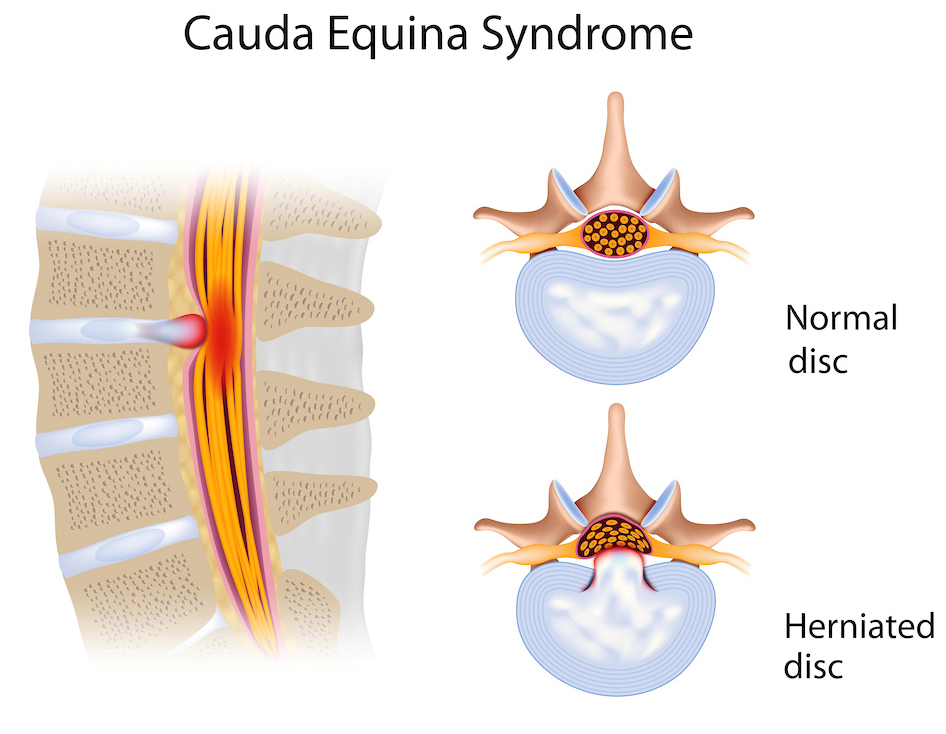
Cauda Equina Syndrome (CES) occurs when the nerve roots at the lower end of the spinal cord are compressed. These nerves (which look like a horse's tail, hence the name) send messages to and from the bladder, bowel, and legs.
Red Flag Symptoms
You must watch for these specific warning signs:
Saddle Anesthesia
Numbness or loss of sensation in the areas that would touch a saddle (inner thighs, buttocks, and genital area).
Bladder/Bowel Dysfunction
Inability to urinate (retention) or loss of control (incontinence). This is a critical sign.
Severe Sciatica
Sharp, severe pain or weakness in both legs (bilateral sciatica), rather than just one.
Sexual Dysfunction
Sudden onset of sexual dysfunction or loss of sensation.
Common Causes
- Massive Disc Herniation: The most common cause is a large slip disc in the lumbar region pressing on the nerves.
- Spinal Tumors: Growths compressing the spinal canal.
- Trauma: Car accidents or falls causing fracture or dislocation.
- Infection: An abscess or inflammation in the spinal canal.
Treatment: Urgent Decompression
Once diagnosed (usually via emergency MRI), treatment involves immediate surgery.
The goal is to relieve pressure on the nerves to prevent permanent damage. The specific procedure (often a Laminectomy or Discectomy) depends on the cause.
Recovery: While surgery can stop the condition from getting worse, nerve recovery can be slow. It may take months or even years for bladder and bowel function to fully return, depending on how long the nerves were compressed before surgery.